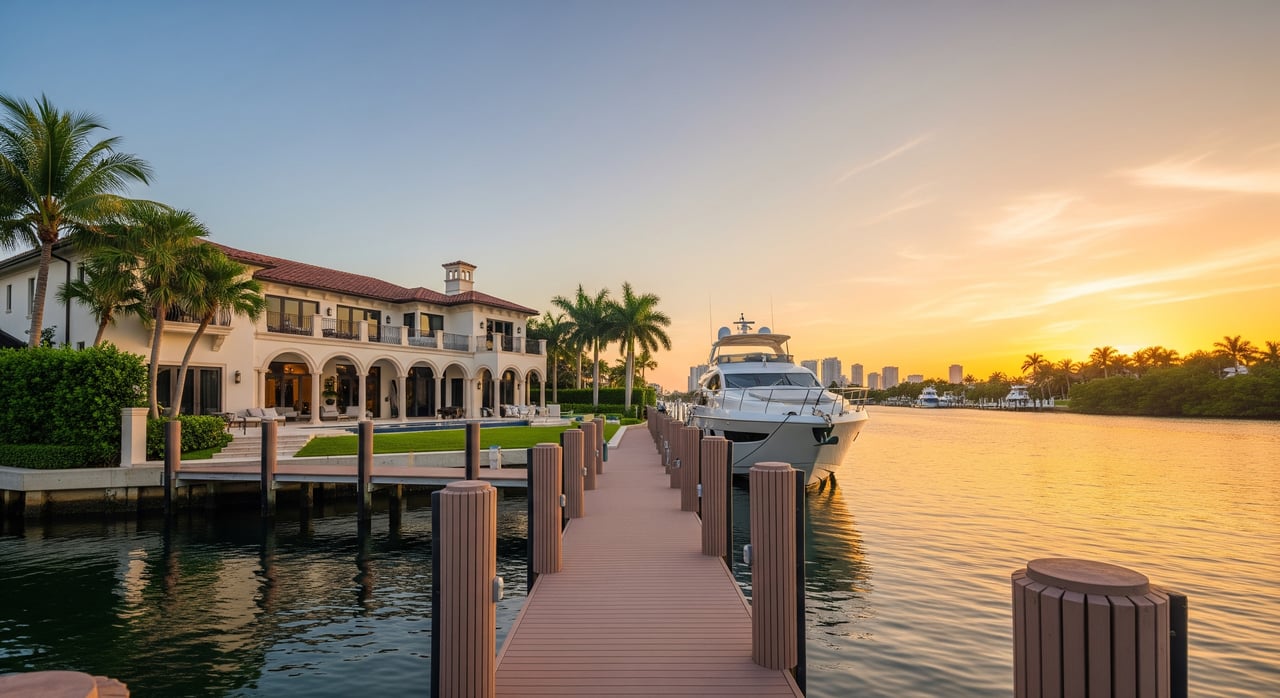
Shopping for a Boca Raton waterfront home and keep seeing the phrase “Intracoastal access”? It is a big deal for boaters, and it can shape your day-to-day routine on the water. The right access can mean a quick hop to the ocean, easy weekend cruising, and fewer surprises with bridges or shallow canals. This guide breaks down how Intracoastal access works in Boca Raton, what to watch for with bridges and depth, and how those details affect lifestyle and property value. Let’s dive in.
Intracoastal access in Boca Raton, explained
Boca Raton sits on the Atlantic Intracoastal Waterway, a protected coastal channel that connects to the ocean through nearby inlets. Many homes sit directly on the ICW, while others line canals that lead to it. You can cruise north or south along the ICW, or head out to the Atlantic through the Boca Raton inlet for offshore fishing and bluewater runs.
Compared with open ocean, the ICW is calmer and more protected, which is great for everyday boating. Travel time to the ocean depends on your distance to the inlet and any bridges you must pass. Tides in this part of South Florida are modest, often around 1 to 2 feet, but even small changes can affect clearance under low bridges and depth in shallow spots.
Access types and what they mean
Direct oceanfront or inlet-front
- What it is: Property located right on the inlet or oceanfront, which is rare and usually premium.
- Boating impact: Fastest route to offshore waters, ideal for sportfishing and larger powerboats.
- Buyer notes: Expect higher pricing and higher wind and surge exposure, plus stricter dock permitting and fewer bridge concerns.
Intracoastal-front homes and condos
- What it is: Docks that face the ICW.
- Boating impact: Protected, convenient cruising with easy north-south travel. Ocean run times depend on inlet distance and bridge schedules.
- Buyer notes: Highly desirable among boaters. Confirm whether the dock is private or part of a shared facility, and review HOA rules for slips and transient use.
Canal-front residential properties
- What it is: Docks located on residential canals that feed the ICW.
- Boating impact: You may navigate narrow turns and manage shoaling in some canals. Draft restrictions are common.
- Buyer notes: Verify depth at mean low water, seawall condition, recorded easements, and any community rules that affect your dock or navigation.
Condominiums and community marinas
- What it is: Shared docks or an on-site marina managed by an HOA or operator.
- Boating impact: Convenience and services are a plus. There may be waitlists and size limits for slips.
- Buyer notes: Know if the slip is deeded or leased, review HOA fees and insurance requirements, and check rules that may limit guest use or liveaboards.
Bridges, clearance, and your boat
Along the Boca Raton stretch of the ICW, you will see two main bridge types. Movable bascule bridges open on signal or on a posted schedule. Fixed high-level bridges have a set vertical clearance and do not open. Whether your boat can pass without delay depends on its air draft and the bridge’s clearance.
Typical ranges in South Florida help with planning. Many bascule bridges offer around 20 to 35 feet of clearance when closed, while fixed bridges often span 50 to 75 feet or more. Exact numbers vary by bridge and conditions. Operations follow federal rules in 33 CFR Part 117, and some bridges limit openings during peak traffic. For current details, consult NOAA charts, the U.S. Coast Guard Local Notice to Mariners, or the bridge tender before you go.
Clearance boards show measurements relative to a tidal datum, often mean high water. A higher tide or storm tide reduces clearance. For sailboats and powerboats with tall towers, these inches matter. If your mast or tower exceeds closed-bridge clearance, you will need an opening or a different route.
Quick bridge checklist:
- Confirm your boat’s air draft with antennas up and any outriggers or towers in place.
- Identify every bridge between the property and the inlet, then note closed clearances and opening schedules.
- Account for tide and weather when planning; clearance can tighten at higher water.
- Call the bridge operator on approach if you are unsure.
Marinas, docks, and services to expect
Boca Raton’s waterfront includes private home docks, condo or community docks, commercial marinas, and yacht clubs. Each has trade-offs in convenience, cost, and control. If you plan to berth a boat at home, confirm dock dimensions, approach angles, and water depth at mean low water. At marinas or community facilities, ask about available slip sizes, dredging practices, and the reservation or waitlist process, especially in peak season.
Services vary. Many facilities offer fuel, pump-out, shore power with different amperage options, Wi-Fi, and security. Commercial marinas may have on-site mechanics, haul-out capability, and provisioning. Most will require proof of insurance and may be listed as an additional insured on your policy. Liveaboard rules differ by facility, so check policies early.
If you plan dock or seawall work, know that Florida projects usually require county or state permits, and the U.S. Army Corps of Engineers may be involved for work below mean high water. Seawall condition is a major cost factor for buyers. Review age, repairs, and permits, and investigate any nearby inlet or channel dredging that could influence depth over time.
How access affects value and lifestyle
Homes with direct inlet access or quick runs from the ICW to the ocean often command a premium for boaters. Deeded private deep-water slips carry strong value and can support resale. Canal-front homes that involve longer, narrower, or shallower transits often price below comparable ICW-front properties.
From a lifestyle perspective, fewer bridges and shorter runs mean more spontaneous trips offshore and easier timing for guests and family. Bridge schedules and low-clearance spans add planning, especially for taller vessels and sailboats. Community docks and marina rules can affect how often friends can tie up or how quickly you can head out on a busy weekend.
Insurance and risk also vary. Oceanfront and inlet-facing properties can face higher wind and surge exposure. Confirm site elevation, flood zone, and policy costs early. Dock and seawall maintenance sits with the owner in most cases, so factor future repairs and permitting timelines into your budget.
A practical step-by-step for buyers
- Define your current and maximum boat size, including draft and air draft.
- Trace your route from dock to inlet, listing every bridge and noting closed clearances and opening rules.
- Verify water depth at mean low water for your slip and approach, and ask about recent dredging.
- Confirm dock ownership: deeded slip, transferable lease, or shared community facility.
- Have a licensed marine surveyor inspect the dock, pilings, and seawall.
- Review HOA or marina rules, including guest policies, liveaboard limits, and insurance requirements.
- Estimate insurance costs for both property and vessel, given location and exposure.
- Speak with local marina managers, marine contractors, and permitting offices before making a final offer.
Ready to find the right fit?
If you want a Boca Raton waterfront home that matches your boating style, the details matter, from bridge clearances to seawall condition. You deserve guidance that blends local knowledge with smooth, high-touch service. For a curated short list, private dock due diligence, and coordinated inspections, connect with Alicia Adams.
FAQs
What does Intracoastal access mean in Boca Raton real estate?
- It refers to a property’s ability to reach the Atlantic Intracoastal Waterway and, from there, cruise north or south or head to the ocean through the Boca Raton inlet.
How do bridges affect day-to-day boating from my dock?
- Low-clearance bridges and restricted opening times can add waiting or limit passage at peak hours, especially for sailboats and tall powerboats.
What should I check about depth for a canal-front home?
- Confirm water depth at mean low water for the slip and approach, ask about recent dredging, and evaluate seasonal shoaling that could affect your draft.
Is a deeded slip in a condo worth paying more for?
- For active boaters, deeded slips usually add security of access and resale value, provided the size, transferability, and fees align with your needs.
What permits are needed to build or replace a dock?
- In Florida, dock and seawall work typically needs county or state permits, and the U.S. Army Corps of Engineers may be involved for work below mean high water.
