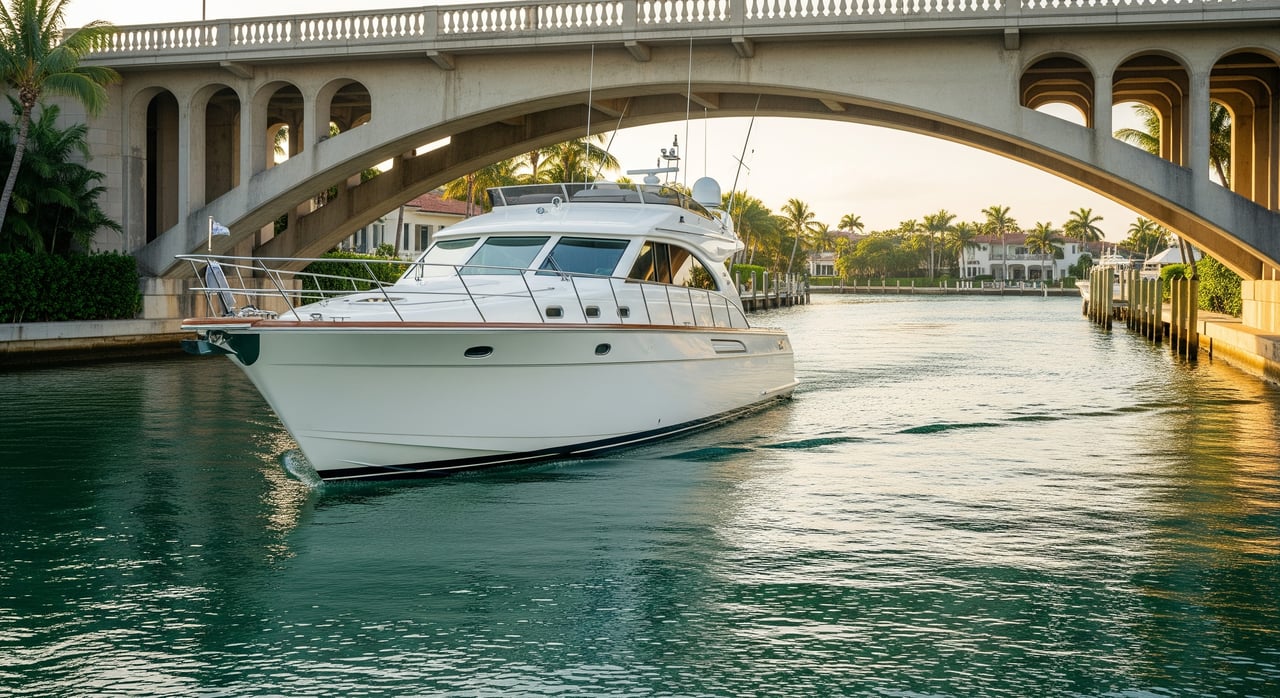
Love the idea of keeping your boat behind your Highland Beach condo or townhome? One detail often decides everything: whether your vessel can clear the fixed bridges between your dock and open water. It is a simple concept, but there are a few moving parts that can surprise even seasoned boaters.
This guide walks you through the essentials of bridge clearance, how tides change your available height, and where to get authoritative numbers for the West Palm Beach–Boca Raton–Delray Beach corridor. You will also get a practical checklist to use when evaluating a property, plus options if your vessel is too tall. Let’s dive in.
Bridge clearance basics
Vertical clearance vs. air draft
- Vertical clearance is the distance from the water surface to the lowest part of a bridge. It is published relative to a tidal datum, most often Mean High Water.
- Air draft is the distance from your boat’s waterline to its highest fixed point, like a mast or radar arch.
- A safe transit happens when your boat’s air draft is less than the bridge’s available clearance at that moment, with a safety margin to spare.
Tidal datums change real-world clearance
Published bridge clearances are not static. They are tied to a specific tidal datum. Actual clearance when you pass will be the published number plus or minus the tide height at that time. In Palm Beach County, normal tidal ranges are modest, but tides still matter. Storm surge, seasonal effects, and onshore winds can push water levels higher than expected. Always check current tides before you go.
Movable bridges vs. fixed bridges
Fixed bridges do not open and set the true height limit on your route. Movable bridges can open for taller vessels. Along the Intracoastal Waterway, operating schedules follow federal rules and local management. Many open on request except during posted no-opening periods, such as weekday rush hours. Confirm schedules for each bridge you plan to use.
Build in a safety margin
A tight squeeze is not a plan. Add a margin to account for wakes, loading changes, antennae, dinghies, and simple measurement error. A practical rule of thumb is 6 to 12 inches for small vessels in calm conditions and 1 to 2 feet or more when conditions are uncertain.
Where to find accurate numbers
Use NOAA nautical charts
NOAA charts show fixed and movable bridge locations and list their published clearances with the chart’s datum. Start with the NOAA Office of Coast Survey’s online Chart Viewer and review the Intracoastal corridor near Highland Beach. You can browse the chart layers and confirm the features on your route. Visit the NOAA Chart Viewer.
Check tides before you go
Look up predicted tides for the time you plan to pass a bridge. Compare the predicted water level to the chart’s datum to estimate actual clearance. You can access official tide predictions and local station data through NOAA Tides & Currents.
Verify openings and restrictions
Temporary changes to bridge operations, maintenance closures, or altered schedules appear in the U.S. Coast Guard’s Local Notice to Mariners. Before a property tour by water or a first transit with a new boat, review the current notice for Southeast Florida and confirm any scheduled or restricted openings. Check the U.S. Coast Guard Local Notice to Mariners.
For general operating rules and bridge administration resources, use the Coast Guard’s bridge program portal. See the U.S. Coast Guard Bridge Administration.
FDOT and local contacts
Florida Department of Transportation manages many movable bridges and may publish operating details. Use FDOT’s regional page to find the appropriate contacts for Palm Beach County bridges. Start at FDOT District Four. For real-time conditions, call nearby marinas and ask the harbormaster how boats like yours typically handle local bridges on various tides and during busy hours.
Buyer checklist before you sign
Use this pre-purchase checklist if you are evaluating a waterfront condo, townhome, or single-family property with dockage:
Slip and dock specifications
- Maximum permitted length overall, beam, and air draft. Confirm any HOA height limits or lift restrictions.
- Water depth at mean low water, vessel weight limits, and whether lifts or davits are allowed.
- Slip assignment rules, guest slips, and policies for transient docking.
Route constraints
- Identify every fixed and movable bridge between the property and your destinations on the ICW or ocean.
- Confirm fixed-bridge clearances on NOAA charts and note the datum used.
- Check the Coast Guard’s Local Notice to Mariners for any temporary changes.
Tides and timing
- Look up NOAA tide predictions for your planned transit windows.
- Note seasonal wind patterns that may push water higher. Build extra margin in winter fronts and onshore wind events.
History and disclosures
- Ask the seller or HOA about past access issues, such as storm surge impacts, prolonged bridge maintenance, or dredging projects.
- If possible, request a recent transit video of a similar-height boat or a written statement from the harbormaster.
Private dock details
- Check for overhead utilities or structures that reduce vertical space.
- Confirm piling spacing, fairway width to the channel, and exposure to wakes.
Measure your boat and run the math
Follow these steps to avoid surprises:
Measure your air draft. Measure from the waterline to your highest fixed point with the boat in typical cruising condition. Include antennae, racks, and any permanent gear.
Add a safety margin. Add 0.5 to 2.0 feet depending on conditions and comfort. The more traffic and chop you expect, the larger the margin you should use.
Find the published bridge clearance. Use NOAA charts to identify the vertical clearance and datum for each fixed bridge on your route.
Adjust for tide. Compare the predicted tide level at your transit time to the chart’s datum to estimate actual clearance on the day.
Compare available clearance to your requirement. If the available clearance is less than your air draft plus margin, change the timing, use a movable bridge opening if possible, or choose a different storage option.
Illustrative example only. Numbers below are for demonstration, not local data:
- Vessel air draft: 16.0 ft
- Safety margin: 1.0 ft. Required clearance: 17.0 ft
- Published bridge clearance: 18.0 ft at datum
- Predicted tide: +0.6 ft relative to datum. Available clearance: 18.6 ft
- Outcome: 18.6 ft is greater than 17.0 ft, so you have roughly 1.6 ft of comfort.
If your boat is taller
If a fixed bridge limits your route, you still have options:
- Time your transit to lower tides within safe margins.
- Use movable bridges where available. Confirm operating windows and any no-opening periods in the Local Notice to Mariners.
- Lower your mast if your vessel is built for it. Confirm HOA or marina rules and professional assistance availability.
- Use a marina with more direct ocean or high-clearance access, dry-stack storage, or a lift. Lifts and davits help with draft and hull protection but do not reduce air draft.
- Choose a property with fewer height constraints. Ask your agent to focus on docks and marinas with proven tall-vessel access.
Planning routes around Highland Beach
Highland Beach sits on the barrier island within the Intracoastal Waterway corridor that ties together West Palm Beach, Delray Beach, and Boca Raton. Most local trips involve the ICW and nearby inlets for Atlantic access. Your route may include both fixed and movable bridges. Expect typical Florida patterns for movable bridges, such as scheduled or restricted openings during weekday commute periods.
Before any trial run with a new vessel, do three things:
- Review bridge clearances on the NOAA Chart Viewer.
- Check the day’s tides on NOAA Tides & Currents.
- Scan the Local Notice to Mariners for the most recent updates.
Then, call two or three nearby marinas or harbormasters to confirm real-world experience. Ask about typical clearance at higher tides, wake conditions near bridges on weekends, and any local best practices for timing openings or transiting tight spans.
Marina and storage solutions
Every property is different. Match your boating style to the right setup:
- Fixed dock considerations. Look for overhead lines, roofed boat shelters, or nearby low spans that could limit vertical space.
- Boat lifts and davits. Great for hull care and draft, but they do not change air draft if your superstructure is tall.
- Mooring fields and buoy parks. These can work well for tall masts when near-property vertical limits exist. You will use a tender to reach shore.
- Dry-stack and trailer storage. A strong alternative if bridges on your favorite route remain a hard stop for your vessel.
- Service and haul-out. Ensure there is a yard nearby that can handle your boat’s size for maintenance and seasonal work.
Insurance and resale implications
Some insurers will ask how you plan to exit to open water and may price risk higher if you are kept behind low fixed bridges with limited alternatives. Think about resale too. A dock or slip that excludes common boat types can narrow your future buyer pool and affect market appeal.
Work with a waterfront-focused advisor
Choosing a Highland Beach property that fits your boating life comes down to measurements, timing, and the right questions. You want confidence that your dock, bridge route, and storage plan match your vessel and your weekend routine.
If you would like a clear path from shortlist to slip-ready, reach out to Alicia Adams. Our team helps you verify HOA and marina specs, confirm bridge schedules, and coordinate the due diligence that makes closings smooth. Ready to find the right waterfront fit? Let’s map your route and your purchase plan.
FAQs
What is bridge clearance and air draft?
- Bridge clearance is the height under a bridge relative to a tidal datum, while air draft is your boat’s height from waterline to its highest fixed point. You need the bridge to be higher than your air draft plus a safety margin.
How do I check Highland Beach bridge heights?
- Use the NOAA Chart Viewer to locate each bridge on your route and review the published clearance and chart datum, then adjust for the tide at time of transit.
How do tides affect Palm Beach County clearances?
- Actual clearance equals the published value plus or minus the current tide relative to the chart’s datum. Check NOAA Tides & Currents before planning your trip.
Where can I find bridge opening schedules and notices?
- The U.S. Coast Guard posts updates and temporary changes in the Local Notice to Mariners. General operating rules are available from the USCG Bridge Administration.
What if my boat is too tall for a fixed bridge near my dock?
- Time your transit for lower tide, use movable bridge openings where allowed, consider mast-lowering, choose a marina with better access, or select a property without low fixed-bridge constraints.
What should I ask an HOA or marina before buying?
- Request written specs on maximum length, beam, air draft, and depth. Confirm lift rules, slip assignment, guest docking, and any limits that affect your boat’s clearance and access.
