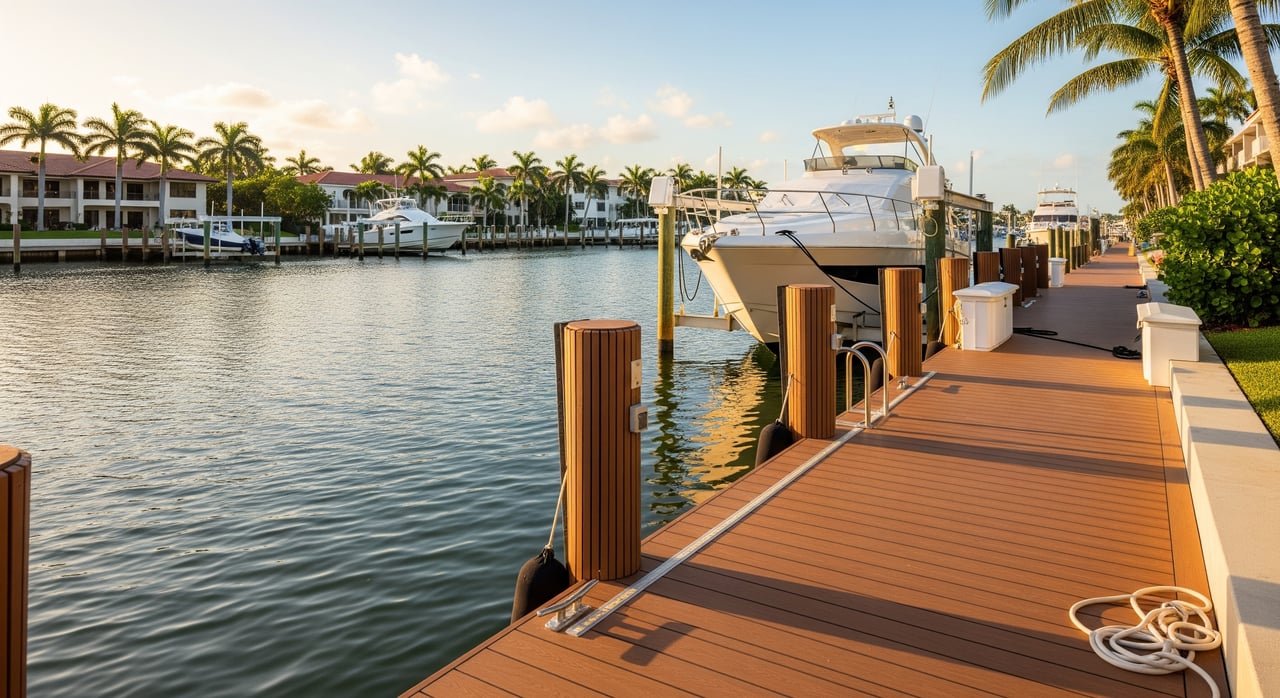
Thinking about a waterfront home in Deerfield Beach and wondering if a marina slip or a private dock is the smarter move? You are not alone. The right setup can make boating easy, protect your investment, and even boost resale value. This guide breaks down the basics, local rules to know, and a simple checklist to help you choose with confidence. Let’s dive in.
Boat slip vs dock: clear terms
A boat slip is a defined berth where a vessel is secured between finger piers or pilings. In a marina, slips usually come with shore power, water, and on-site services. A slip can also exist at a private residence as part of a dock setup.
A dock is the structure attached to a property that provides access to the water. Designs include straight docks, T-docks, L-docks, and finger piers. The dock is the platform; a slip is the boat’s parking space formed by that structure.
Key differences for buyers
Ownership and control
- Private docks give you control over access and upgrades, but you handle maintenance and permits.
- Marina slips are managed by the marina. The operator maintains common areas and typically oversees compliance.
Services and amenities
- Marinas often provide security, fuel, pump-out, and repair access.
- Private docks may have power or water if installed, but services are more limited and owner-managed.
Cost model
- Private docks: upfront capital to build or improve, plus ongoing maintenance and repairs.
- Marina slips: recurring rental or lease fees, sometimes with waitlists or size limits.
Regulatory exposure
- Private dock work must align with city, county, state, and federal rules, plus any HOA guidelines.
- Marinas also follow regulations, but the operator handles daily compliance and maintenance.
Deerfield Beach waterway realities
Deerfield Beach sits along the Atlantic coast with quick access to the Intracoastal Waterway. Many homes back onto canals that connect to the ICW. Depth at mean low water is a critical metric because tidal range is modest but still affects safe navigation.
Federal channels and local markers shape where and how dredging occurs. Depths and conditions can vary by canal, so always verify actual depths rather than relying on neighborhood hearsay.
Permits and rules to verify
Before planning any dock work, check requirements with:
- City of Deerfield Beach Building Department for permits, setbacks, and pier length limits.
- Broward County programs for seawalls, stormwater, dredging, and coastal planning.
- Florida Department of Environmental Protection for sovereign submerged lands and seagrass protection.
- U.S. Army Corps of Engineers for activities in navigable waters and dredging.
- U.S. Coast Guard and Florida Fish & Wildlife Conservation Commission for navigational safety and boating rules.
- Your HOA or deed restrictions for size limits, number of vessels, and approval procedures.
Environmental constraints in South Florida can affect design, materials, and project approvals. Common considerations include seagrass protection, dredging limits, and resilience guidelines that may favor floating elements.
Sizes, depth, and compatibility
Slip sizing varies by boat type:
- Lengths: about 25 to 60+ feet. Small boats often fit 25 to 30 feet. Cruisers commonly need 30 to 40 feet. Larger yachts may require 45 to 60+ feet.
- Widths: often 10 to 20 feet. Many private slips measure 12 to 16 feet, depending on beam.
- Walkway width: 3 to 4 feet minimum is common, with many owners opting for 4 to 6 feet for comfort.
Depth at mean low water is essential. Compare your boat’s draft plus a safety margin to the measured depth at the berth and along the route to the ICW. Account for tidal swings, shoaling, and storm effects. If you need more depth, note that dredging is tightly regulated and can be costly.
Dock types and hardware
Floating vs fixed docks
- Floating docks rise and fall with the tide and can adapt better to changing water levels.
- Fixed docks are pile supported. They are sturdy but less adaptable to sea-level changes and often involve more permitting scrutiny.
Boat lifts and pilings
- Boat lifts can protect your vessel during storms and reduce hull fouling. Match lift capacity to boat weight and hull form. Lifts need electrical service and routine maintenance.
- Pilings can be treated wood, concrete, steel, or composite. Material choices affect longevity, appearance, and permitting.
Utilities and services
- Marinas commonly offer shore power, water, lighting, and pump-out stations.
- Private docks may have some utilities. Electrical work must follow code and may require additional permits.
Maintenance and lifecycle
Material lifespans vary:
- Timber docks often last 10 to 25 years depending on exposure and upkeep.
- Composite decking can last 20 to 30 years, though structural elements still need inspection.
- Aluminum components and gangways can exceed 25 to 40 years with higher upfront cost.
- Floating dock modules typically last 10 to 25 years with periodic checks.
Routine tasks include annual inspections of pilings, fasteners, and framing; pressure washing; sealing or staining wood; replacing decking or hardware as needed; and lift service. In warm water, plan for frequent cleaning to manage marine growth.
Insurance is another factor. Home policies may exclude docks without endorsements. Marinas often require proof of vessel insurance. Hurricane planning, tie-downs, lift protocols, and documentation can affect coverage and premiums.
Costs and tradeoffs
Private docks require upfront investment and ongoing maintenance, but they deliver convenience and control. Marina slips shift costs to predictable monthly or annual fees, with the tradeoff of less customization and potential waitlists. Dredging to deepen a berth is often the most expensive and time-consuming project element if it is needed.
Buyer checklist before you offer
Use this quick list to evaluate a home’s boating setup:
- Is the dock or slip permitted, and are as-built drawings available?
- Exact dimensions: length, width, and depth at mean low water, plus any recent sounding data.
- Legal rights: confirm riparian rights and navigational easements in the deed and title.
- HOA or deed restrictions that limit dock size, vessel count, or require approvals.
- Any active or planned dredging, seawall, or canal maintenance projects nearby.
- Utilities on site: shore power, water, and whether electrical work meets code.
- Condition of pilings, seawall or bulkhead, framing, decking, and hardware. Get a marine contractor inspection if needed.
- Insurance considerations, including dock coverage and storm exposure.
- Nearby marina alternatives, including costs, waitlists, and amenities.
Request documentation such as recent depth soundings at mean low water, copies of permits, evidence of compliance for any work seaward of mean high water, lift service history, and clarity on canal maintenance responsibilities.
Decision framework: slip or dock?
- Usage and convenience: If you boat often, a private dock can be worth the investment. If you prefer services, security, and less maintenance, a marina slip can be easier.
- Boat size and draft: Larger or deeper draft boats may not suit all canals. Confirm depth to the ICW before committing.
- Cost tolerance: Private dock equals capital plus maintenance. Marina slip equals recurring fees that may be easier to budget.
- Resale impact: A permitted, well-maintained dock that fits common boat sizes can enhance marketability. Poor condition or unpermitted work can hurt value and delay closing.
- Storm resiliency and insurance: Consider how a lift, floating elements, and marina hurricane procedures factor into your risk and coverage.
Next steps in Deerfield Beach
Every canal and property is different. Verify local requirements with the City of Deerfield Beach, Broward County, and state and federal agencies. Check depth data from reliable local tide references, ask for recent soundings, and speak with a marine contractor about materials, permits, and timelines.
If you want a move-in-ready waterfront home or a property with space to build the right dock, you deserve a partner who understands both the lifestyle and the logistics. Reach out to Alicia Adams for tailored guidance on Deerfield Beach and neighboring Broward and Palm Beach markets.
FAQs
What is the difference between a boat slip and a dock?
- A slip is the boat’s defined parking space, often between finger piers or pilings, while a dock is the structure attached to land that provides access to the water.
Do I need permits to build a dock in Deerfield Beach?
- Yes, most projects require approvals from the City of Deerfield Beach, Broward County, the Florida Department of Environmental Protection, and possibly the U.S. Army Corps of Engineers.
How deep should the water be for my boat in Deerfield canals?
- Depth at mean low water should exceed your boat’s draft plus a safety margin, with extra allowance for tidal changes and shoaling.
Are floating docks better than fixed docks in South Florida?
- Floating docks often adapt better to changing water levels, while fixed docks offer stability but less flexibility for sea-level rise.
Who maintains seawalls and canals by a home in Broward County?
- Homeowners typically maintain their seawalls. Some neighborhoods share canal maintenance or have special districts, so confirm responsibilities before purchase.
How do marina slips compare to private docks for hurricanes?
- Marinas often have hurricane plans and haul-out options. Private dock owners need their own storm procedures, and lifts can add protection when used correctly.
